
Develop Sales · Make Data Actionable
Digitizing Analog Sales
Ich begleite mittelständische Unternehmen dabei, einen datenbasierten Vertrieb zu entwickeln — von der Excel-Liste und Bauchgefühl zum belastbaren System. Mit Ihnen und Ihrem Team entwickle ich die Strukturen und setze sie um, bis sie im Alltag tragen.
Experience
30+ years
Sales and Leadership in Industry and Commerce — I speak the language of your team.
How It Works
Consulting & Implementation
I'll work with your team to design the structure and embed it in your daily routine—until it can function on its own without me.
From Canada to Europe
Support Market Entry
I help Canadian small and medium-sized businesses enter the German market—as a door opener, bridge builder, and insider.

The Situation in Sales
Everyone wants AI. But hardly anyone has the data for it.
The products are good, and the employees are good. Nevertheless, business is becoming more difficult. Most of the time, this isn't due to the market, but to structures that have developed over the years and have never been questioned.
01
Knowledge resides in people's minds, not in the system
When an experienced salesperson leaves, the customer often goes with them. What was discussed is written down in a notebook—not where the company can make use of it.
02
AI without data doesn't provide answers
The tools have been purchased, and expectations are high. But every system relies on the documentation available in-house—and so far, there isn't enough of it.
03
Everyone does what they think is right
Some individuals are using AI tools on their own initiative. There are no clear guidelines on which customer and company data may be used, for what purposes, and with what tools.
04
Decisions are made based on intuition
Which customer is worth the next trip? Which quote will actually turn into an order? Without numbers, it's all just guesswork.
05
Trade show appearances cost five figures—with no results
The booth has been reserved, and the talks are going well. Four weeks later, there’s a stack of business cards in the office, and the question of the outcome remains unanswered.

From the industry, for the industry
Consulting and implementation go hand in hand.
In most organizations, it’s been clear for a long time where the problems lie. What’s missing is someone to carry out the transformation alongside day-to-day operations. I do both: I design the structure together with your team and then continue to work with you until it’s firmly established in your daily operations. How quickly we move forward depends on your current situation.
- From real-world experience. Over 30 years of sales and management in industry and commerce.
- Accountability. Each action is assigned a person in charge, a deadline, and a metric.
- Network. Whenever specialized knowledge is needed, I bring in experts.
Sales Optimization & Business Development
From Analog to Digital Distribution
It all starts with the data and the approach; the tools come later. I’m with you every step of the way—both conceptually and operationally.
- Implementation and Training for CRM and AI-Powered Sales Processes
- The introduction of digital sales structures requires a different approach to leadership and collaboration, as well as different organizational structures. I help develop and implement these changes.
- Support in developing new sales channels and market segments

6 building blocks
Six Building Blocks for Your Digital Sales Strategy
01
Your team works digitally
Field sales representatives use digital tools because they make their work easier. They practice using their own customer cases, not sample data.

02
A CRM that's actually used
You implement a system or revive an existing one. The decision is made quickly; the real work lies in the maintenance that actually takes place on a day-to-day basis.

03
Data You Can Access
Scattered lists, paper documents, and information stored in people's heads are consolidated. You determine which data may be used, for what purpose, and with which tool.

04
Improve organization and management
Those who work digitally need different responsibilities, different meetings, and different metrics. We’re implementing these routines to ensure that the new process becomes part of our regular operations.

05
Empowering Leaders During Times of Change
I guide executives and teams through change—whether it involves a new leadership role, working independently, or fostering a culture that supports both.

06
Provide inspiration, offer guidance
Mentoring, workshops, and coaching for your leadership team. Whenever there’s a lack of clarity about the next step.

This Is How I Work
First the situation, then the measures.
Your starting point determines how quickly and how thoroughly we proceed. A stable organization requires a different pace than one under pressure. I’ll stay on board until your team can manage the process on its own.
Step 1
Clarify the situation
We’ll take a look at where your data is stored, how sales are conducted, what your internal processes and workflows look like, how visible you are in the market, and what metrics are currently being tracked. The result is a clear-eyed assessment of your situation. We’ll build on that.
Step 2
Setting Priorities
We select a few measures that have a noticeable impact. Everything else can wait until the first step has become part of our daily routine.
Step 3
Try it out in everyday life
A small team starts by following the new process. Visible results convince the team faster than any announcement from above.
Step 4
Establish and sustain
The new process will have designated personnel, deadlines, and key metrics. It will be incorporated into your existing scheduled tasks and tracked there going forward.
MARKET ENTRY IN GERMANY, AUSTRIA, AND SWITZERLAND
A Gateway to the German Market
Germany and Europe are attractive markets for foreign companies—and the relationship with Canada, in particular, is impressively dynamic. I help Canadian small and medium-sized businesses enter the DACH market by serving as a bridge-builder, door-opener, and insider.
- Market Entry & Sales Development. Entering the German market and establishing sustainable sales structures—with a focus on capital goods, construction, construction equipment, and sustainability.
- Target Customers & Opportunities. Identify and prioritize the most profitable customers and market segments.
- Networking & Associations. Advocacy and access through associations and established industry contacts.
- Access to decision-makers. Direct contacts in the construction and construction equipment industries.


Additionally · Confidential
Some decisions are better made with others.
As a CEO or sales manager, you often make decisions without having someone on the other side who knows the industry and will openly challenge your ideas. That’s exactly what I offer: a confidential conversation in which you can test your ideas before presenting them internally.
- Independent. No reporting, no agenda other than yours.
- Industry-specific. I understand your processes, your customers, and your competition.
- The outcome is open-ended, but not without consequences. In the end, a decision is made—there is no further appointment.
Contact
Tell me where you're having trouble with sales.
During our first conversation, we'll discuss your current situation and determine whether I'm the right person for the job. If not, I'll let you know.
No-obligation, free of charge, and with no strings attached
Approx. 30 minutes · Via video or phone
 CONTACT
michael.radwe@mira-projekt.com
 LINKEDIN
Michael Radwe's Profile
 NETWORK
German-Canadian Society
 RESPONSE TIME
Response within 24 hours
Why the Mira Project
"I'm staying until it's up and running."
Many consulting projects end with a presentation. The analysis is sound, the recommended actions make sense—and then there’s simply no time to implement them in day-to-day operations. I have a background in sales in this industry and know how quickly day-to-day business can derail a project. That’s why I stay involved until the new process is running smoothly on its own.
- I know the lingo. Retail processes, field sales, industry issues—I come from that world.
- A prominent figure in the industry. Columnist for the trade magazine PROTRADER; active in VDBUM, ZDB, and bbi.
- Proven AI expertise. Certified AI Manager—I know what’s working today and what isn’t yet.

Blog
Thoughts from the Field
-
Anyone who wants to ensure stability today must be prepared to endure instability.
Selten habe ich Zeiten erlebt, die so unruhig waren wie heute. Partnerschaften und verlässliche Strukturen, die über viele Jahrzehnte hinweg trugen, brechen nun plötzlich weg. Machtachsen verschieben sich im Großen wie im Kleinen. Neue Technologien verändern Geschäftsmodelle. Märkte reagieren schnell und oft radikal. Gerade in so bewegten Zeiten ist Stabilität ein zutiefst menschliches Bedürfnis. In…
-

Criticism of Social Media
Right now, the topic of 𝗦𝗼𝗰𝗶𝗮𝗹 𝗠𝗲𝗱𝗶𝗮 is causing a huge stir. This baffles me, given that the architecture and mechanisms of these platforms have been widely known and well-researched for decades. Incidentally, their negative effects have also been demonstrated in adults. The criticism is directed at the 𝗗𝗲𝘀𝗶𝗴𝗻-𝗘𝘁𝗵𝗼𝘀: Facebook was specifically programmed to exploit human psychology (Persuasive…
-
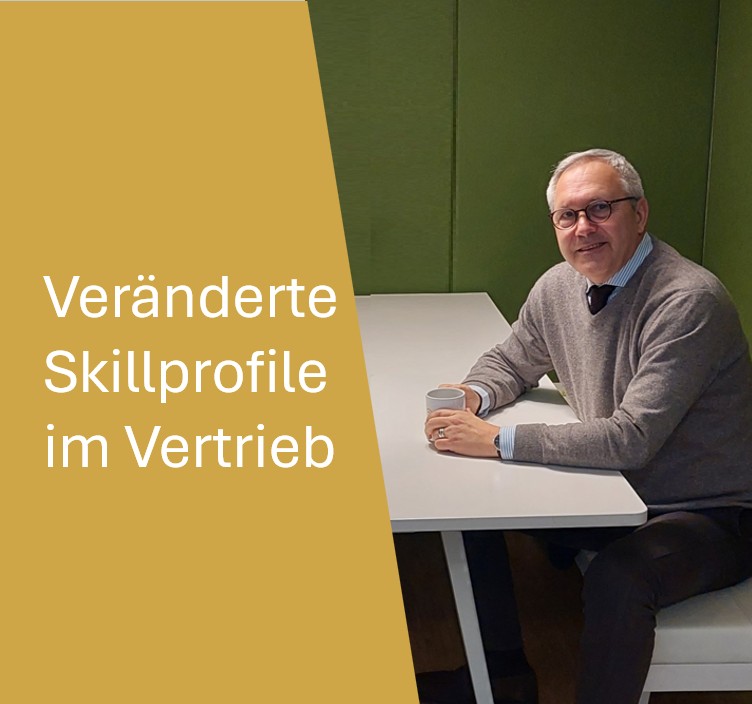
Changing Skill Profiles in Sales
𝗗𝗲𝗿 𝗩𝗲𝗿𝘁𝗿𝗶𝗲𝗯 𝘃𝗼𝗻 𝗜𝗻𝘃𝗲𝘁𝘀𝘁𝗶𝘁𝗶𝗼Today, sales rarely fail because of the product—but rather because of the skill set.The platform economy is changing not only channels and processes, but also, quite specifically, the requirements for sales representatives. Anyone who still relies exclusively on experience, relationship building, discounts, and product depth is increasingly hitting limits in their day-to-day work. 𝗘𝗿𝘀𝘁𝗲 𝘇𝗲𝗻𝘁𝗿𝗮𝗹𝗲 𝗩𝗲𝗿𝘀𝗰𝗵𝗶𝗲𝗯𝘂𝗻𝗴: Data literacy is becoming operationally relevant. Sales representatives must be able to interpret platform, CRM, and usage data,…
-
Changes Brought About by Digital Marketplaces
𝗗𝗲𝗿 𝗼𝗽𝗲𝗿𝗮𝘁𝗶𝘃𝗲 𝗩𝗲𝗿𝘁𝗿𝗶𝗲𝗯𝘀𝗮𝗹𝗹𝘁𝗮𝗴 𝗶𝗺 𝗜𝗻𝘃𝗲𝘀𝘁𝗶𝘁𝗶𝗼𝗻𝘀𝗴ü𝘁𝗲𝗿𝗴𝗲𝘀𝗰𝗵ä𝗳𝘁 is changing faster than many organizations are willing to admit. The platform economy is no longer an abstract strategic issue—it directly impacts processes, roles, and priorities in sales. Not someday, but right now. A primary, often underestimated effect: Sales is losing its monopoly on information. Today, buyers systematically research products and services via B2B platforms, supplier portals, and digital marketplaces.…
FAQ
Six phrases I hear over and over again in initial interviews.
"We want to start using AI, but our data isn't sufficient for that."
This sequence makes sense, since the pressure comes from outside. However, every AI tool works with whatever data is in the system—and in most organizations, there simply isn’t enough. We first determine what data you actually have and what you need to answer your questions. Only then do we decide where AI can deliver immediate benefits and where it needs to wait.
"We have a CRM. It's just not being used."
I hear that in almost every company. Most of the time, the system was implemented without ever explaining to the sales force what’s in it for them—maintaining the data takes up their time, but the benefits go to someone else. That’s why we remove all the fields that no one analyzes anyway and make sure that salespeople get more out of the system than they put into it. From that point on, there’s no need to convince anyone.
"Here, everyone works with their own lists and tools."
Such siloed solutions arise because people help each other out when the official system fails. The situation becomes critical as soon as customer data ends up in tools whose use has never been regulated. We identify what is actually in use within the organization and determine what data may be used, for what purpose, and with which tool. We then consolidate the scattered data sets.
"If my best salesperson leaves, the customer is gone."
This is a real risk, not a criticism of the employee. The relationship belongs to the employee because the company has never created a space where it can be made visible. We are gradually transferring the history of conversations, commitments, and opportunities into a shared system without turning field staff into report writers. The goal is to create a customer profile that even a successor can understand.
"My sales team isn't on board with that."
Resistance almost always has valid reasons: fear of being monitored, extra work, doubts about one’s own abilities. These reasons need to be addressed openly; otherwise, you won’t get the team on board. We start with a small group of colleagues who experience the benefits firsthand and spread the word. Leadership must take the lead in this effort; otherwise, any announcement will fall on deaf ears.
"We've already made two attempts. Both fell through."
This is the most common scenario, and it’s almost never a flaw in the concept. Projects fizzle out when no one is specifically assigned responsibility, no deadline is set, and no results are measured. We assign every action to a specific person, a date, and a metric, and we discuss the progress during your existing scheduled meetings. In addition, we check whether your management routines align with the new way of working—otherwise, day-to-day business will reclaim your attention.